


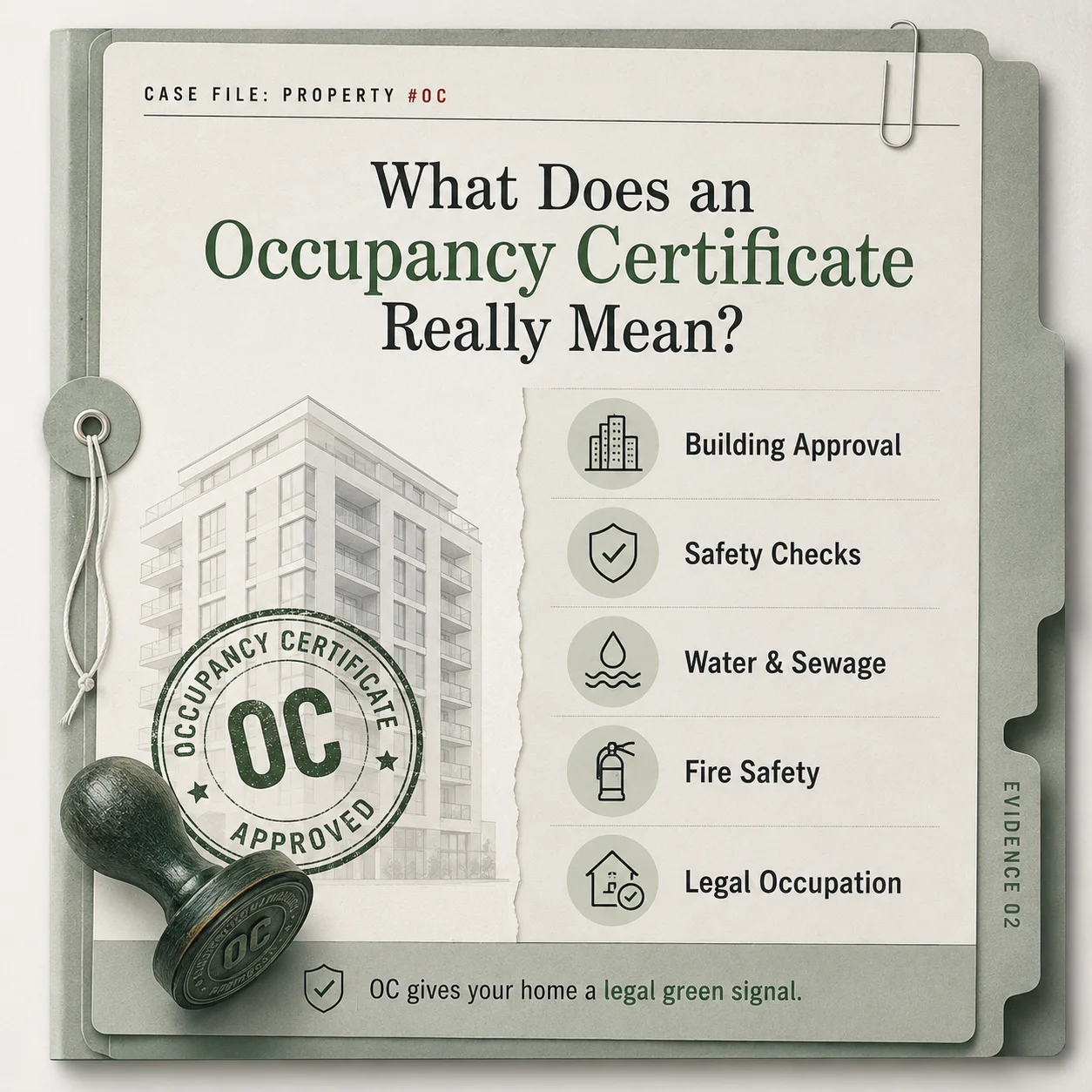
If you're buying a flat in Pune right now, there's one document that matters more than the shiny brochure, the sample flat, or even the price negotiation — the Occupancy Certificate, or OC. It sounds like paperwork nobody cares about. It isn't. An Occupancy Certificate is the local municipal authority's official confirmation that a building is safe, legally complete, and fit for people to actually live in. Without it, you could be moving into a home that the law technically says shouldn't be occupied yet.
This guide explains what an Occupancy Certificate is, why it's suddenly a big deal in Maharashtra in 2025–26, and
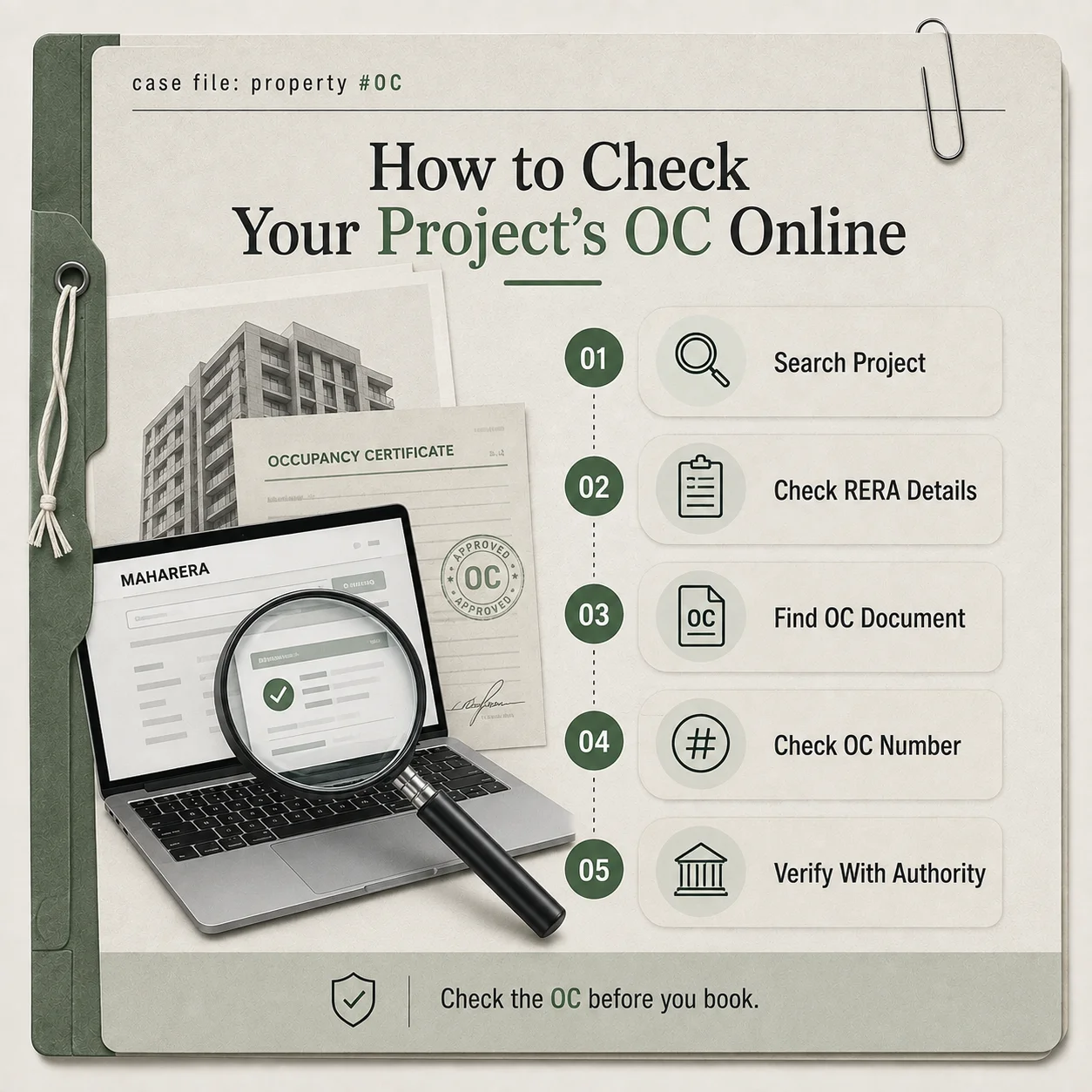
exactly how you — whether you're a buyer, tenant, agent, or lawyer — can check one before you sign anything.
Quick Summary Table
| Attribute | Detail |
|---|---|
| Full form | Occupancy Certificate (OC) |
| Issued by | Local municipal/planning authority (e.g., PMC, PCMC in Pune) |
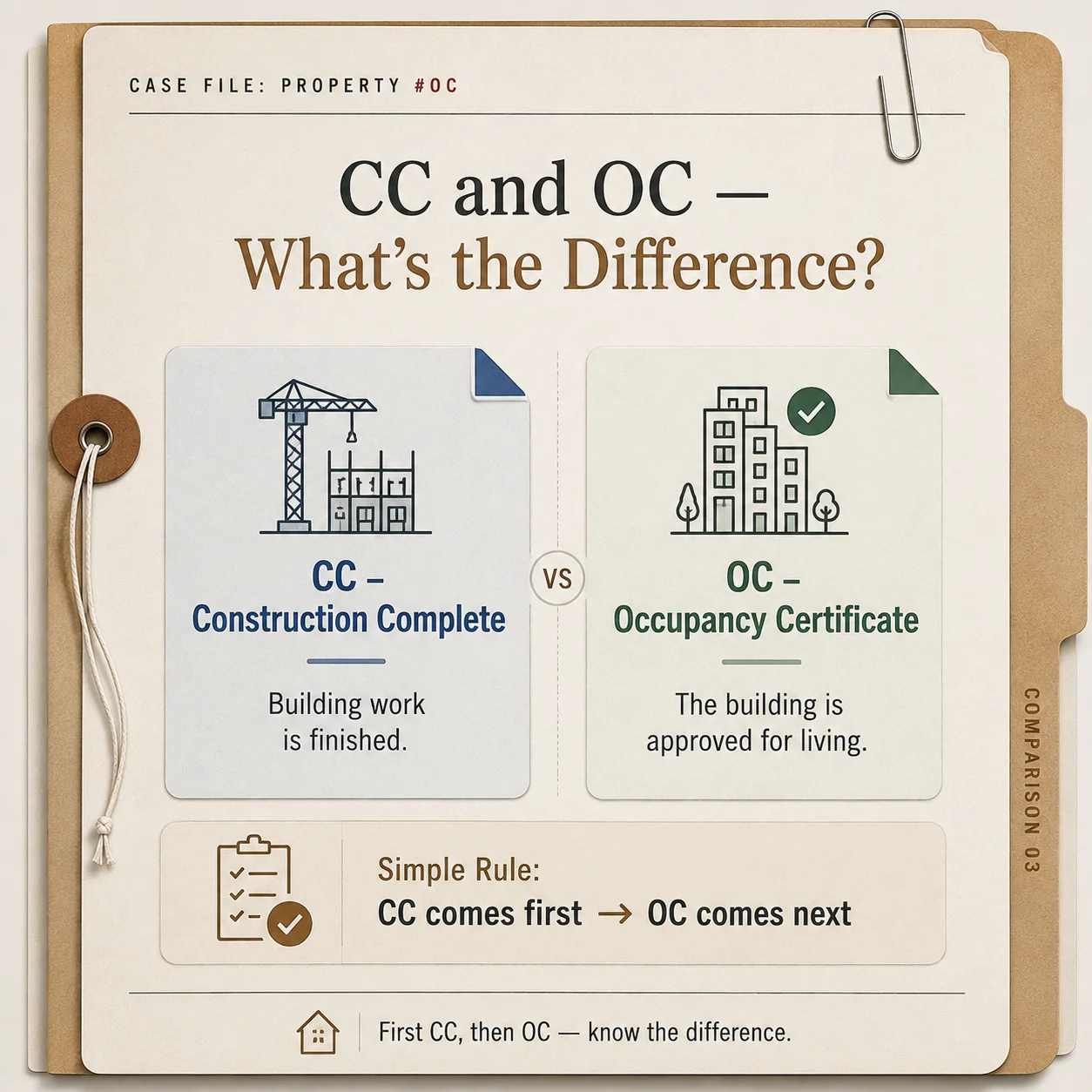
| Issued after | Completion Certificate (CC) — OC cannot be applied for before CC |
| Legal basis in Maharashtra | Maharashtra Ownership Flats Act (MOFA), 1963 + RERA |
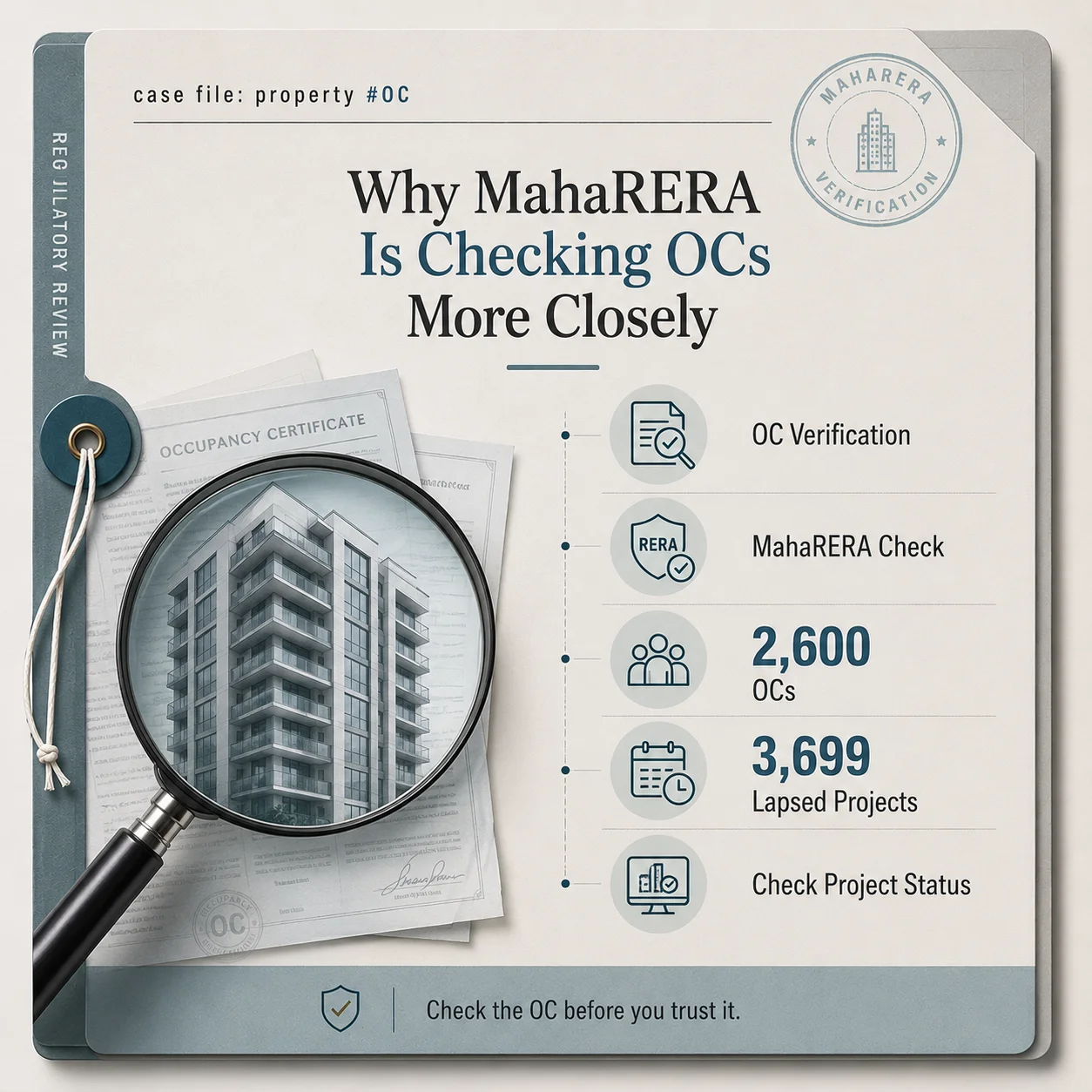
| Key 2025–26 development | MahaRERA verifying ~2,600 OCs on its portal; separate 10-day scrutiny order for 3,699 lapsed projects |
| Landmark judgment | Samruddhi Co-operative Housing Society v. Mumbai Mahalaxmi Construction (SC, 11 Jan 2022) |
| 2025 court update | Bombay High Court: a "conditional OC" does not end a builder's RERA liability for delayed possession |
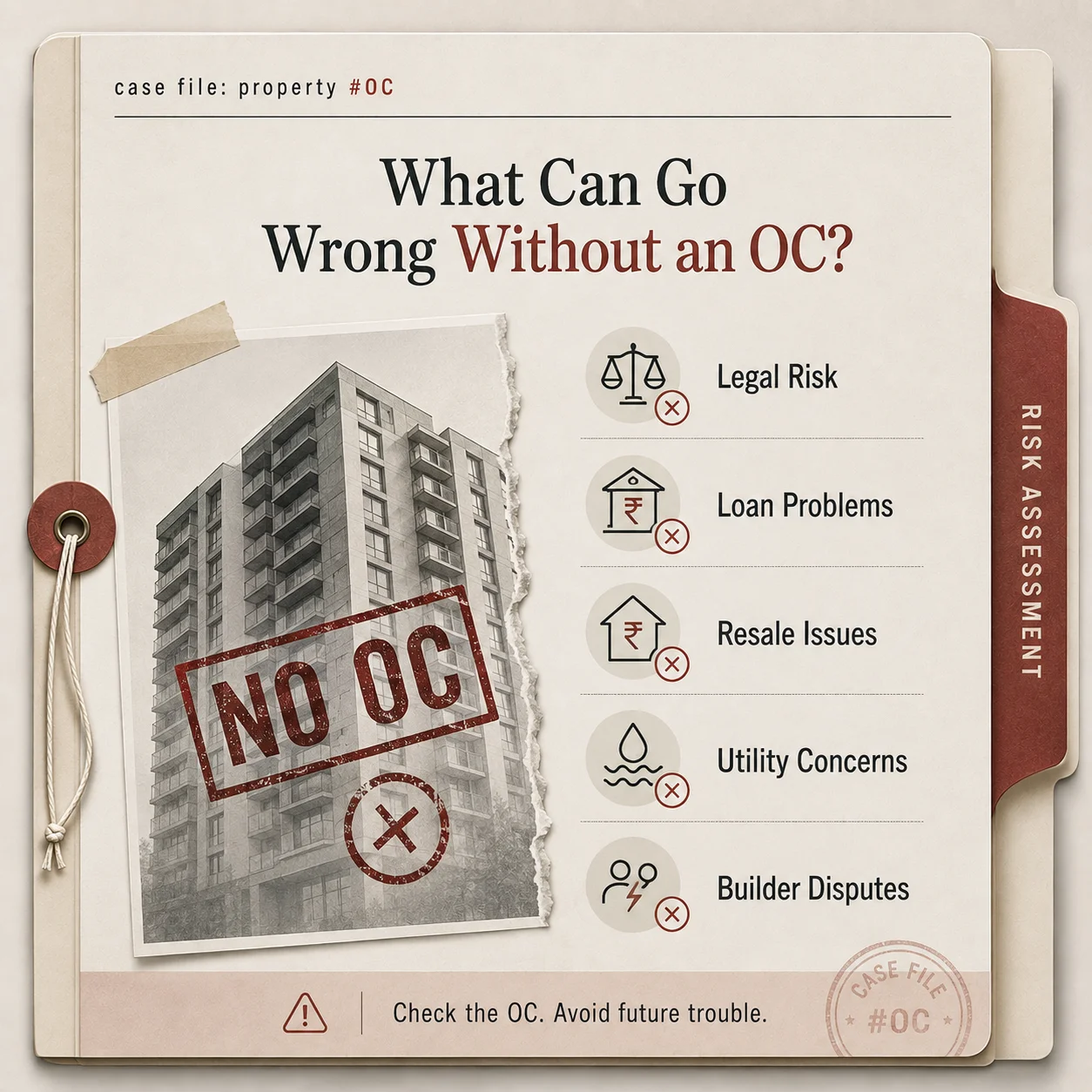
| Risk without OC | Illegal occupation, home loan/resale issues, no utility connections, no maintenance-charge enforceability |
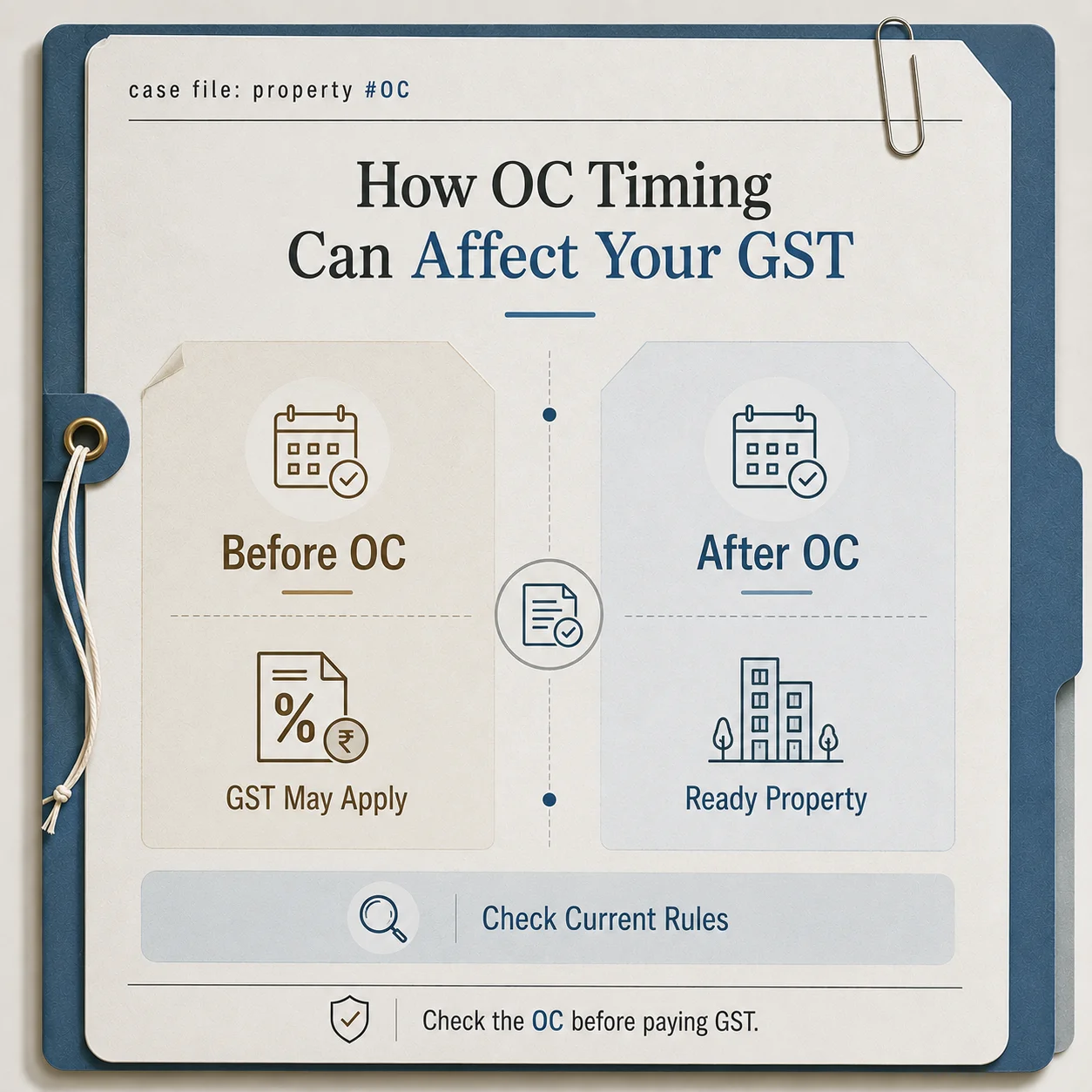
| GST relevance | No GST on OC-certified ready properties; GST slabs apply before OC issuance depending on category |







 Share on Facebook
 Share on Linkedin